· Updated 5 August 2026 · Loïc Chiappini
Are Dog Ball Launchers Safe? 5 Risks and How to Avoid Them
The PDSA's 2025 PAW Report puts the UK dog population at 11.1 million pet dogs, and a growing slice of them play fetch with a machine rather than a human arm. So the question deserves a straight answer: an automatic dog ball launcher is safe for most healthy adult dogs, provided you manage five specific risks — four of which are settled by decisions you make before the first session.
Risk 1 — a ball to the face at the launch opening
A keen fetcher does not wait politely. They drop the ball in, then jam their nose against the opening for the next throw. If the machine fires at that moment, the ball hits the snout or an open mouth at launch speed. It is the most common way a dog gets hurt by any automatic launcher, and high-drive breeds — collies, working cockers, springers, malinois — are the most exposed, because they park their face exactly where the ball comes out.
Two habits deal with it:
- Use the loading delay to teach a step-back. On the FetchMate, dropping a ball into the top opening triggers the launch roughly four seconds later. That gap is the training window: reward your dog for backing away as soon as the ball goes in. Two or three sessions of rewarding the retreat is usually enough — our training guide walks through it step by step.
- Respect the manufacturer's warning. The manual is blunt: never put your hand into the launch pocket while the machine is switched on. The same rule applies to noses. Supervise every session until the step-back habit is solid.
We will not pretend our machine polices this for you — no setting replaces those first supervised sessions.
Risk 2 — tooth wear from felted tennis balls
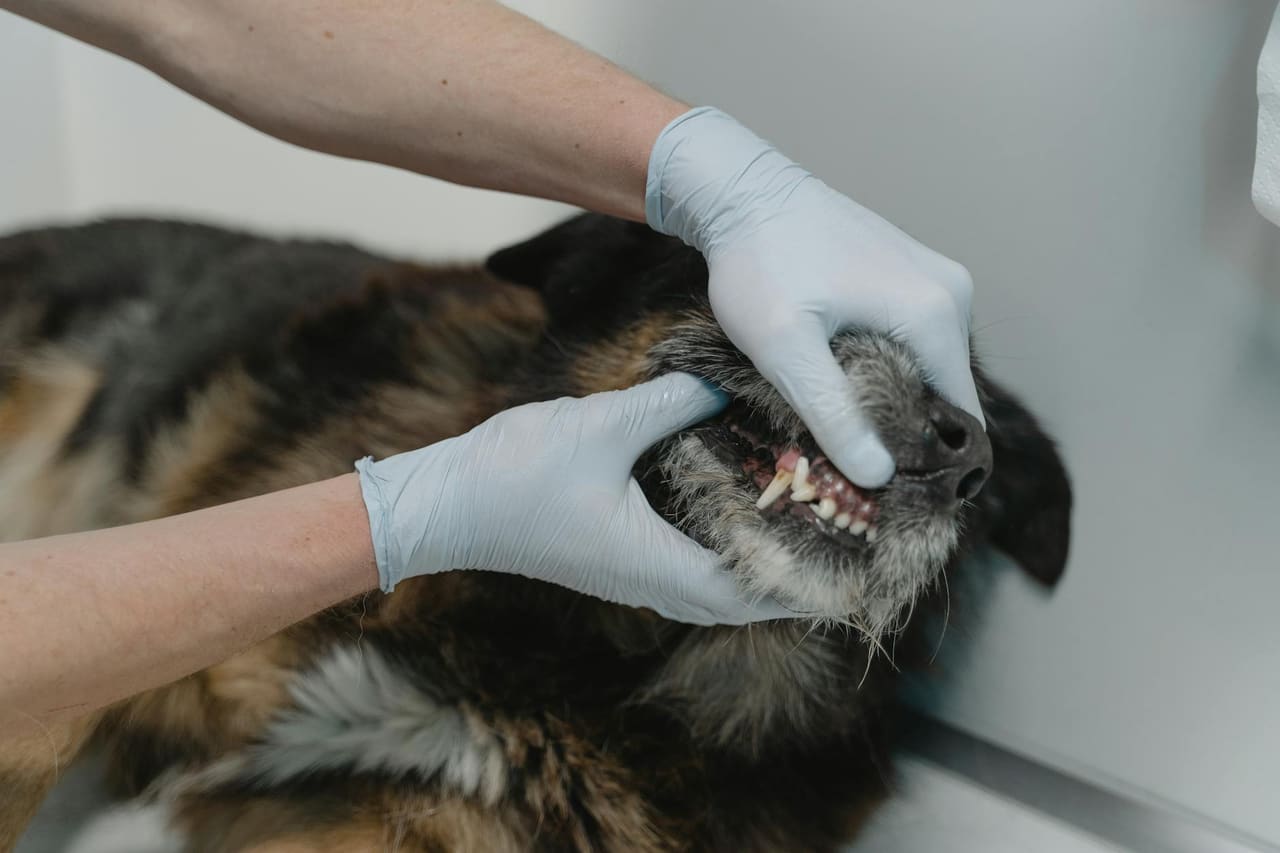
Standard tennis balls are covered in felt designed to grip a court. That felt picks up sand and grit, and a dog who carries and chews a tennis ball daily is holding a mild abrasive against their own enamel. Over years, heavy ball-carriers can end up with visibly flattened molars — a pattern common enough that it has a nickname among the people who look in dogs' mouths for a living.
Dog enamel is thinner than ours and does not grow back, which is why the ball material matters. The FetchMate ships with three ETPU foam balls, 58 mm across, with no felt covering at all — so there is no grit-holding fuzz to grind against teeth. The manufacturer describes them as chew-resistant but, in its own words, "not completely unbreakable", so inspect them weekly and bin any ball that is split or losing chunks. Whatever launcher you own, keep balls for sessions rather than leaving one in the toy box, and mention daily fetch at your dog's annual dental check.
Risk 3 — joint stress and growing dogs
Fetch is not a gentle activity. The sprint-stop-turn pattern loads shoulders, elbows, hips and stifles, and a machine changes the maths in one dangerous way: it never gets tired. A human shoulder gives up after fifty throws; a launcher will keep going as long as balls keep going in. Without a deliberate cap, it is easy to give a dog several times the joint loading of a normal park visit — and the dog will never be the one to call time.
The rules worth keeping:
- No launcher for puppies before the growth plates close. As a broad guide that is around 8 months for small breeds and past 14 months for large ones — the full breakdown, and what to do instead, is in our puppy guide. Your vet can confirm the timing for your dog.
- Cap sessions at about 15 minutes, with pauses, and stop at any limp, hesitation or stiffness.
- Indoors, use the shortest distance only. The FetchMate's Distance 1 setting throws 6 metres, which is the only one the manufacturer recommends inside — and never on slippery floors.
- A dog with diagnosed joint disease is a different conversation. Our arthritis article covers what to ask your vet before any fetch at all.
Risk 4 — choking on the wrong ball size
A ball small enough to fit entirely inside a dog's mouth can slip behind the tongue and block the airway. That is why ball size is matched to jaw size, not to enthusiasm. The blunt rule: the ball should be too big to disappear into the mouth.
The FetchMate uses 58 mm ETPU balls and is built for small and medium dogs. For a large dog — roughly 25 kg and up — a 58 mm ball is on the small side for safety and the machine is the wrong tool; our large-dog guide covers the alternatives honestly. Note that a standard tennis ball (about 6.5 to 6.8 cm) does not fit the FetchMate at all — the machine takes its own 58 mm ETPU balls only, which our ball size guide explains in detail. The other failure mode is swallowed fragments from a damaged ball, which can mean surgery: inspect weekly, replace promptly, and never leave launcher balls down between sessions.
Risk 5 — obsession in high-drive dogs
For some working-line dogs — collies, working cockers, malinois, kelpies — fetch can tip from a game into a fixation: pacing, whining at the cupboard, refusing food until the ball comes out. In its severe form this is recognised as compulsive behaviour, and a machine that fires on demand can entrench it.
Prevention is structural. Cap working-line breeds at two short sessions a week; make fetch one outlet among several (scent work, training games, decompression walks); train a reliable drop; and put the launcher physically out of sight between sessions. If your dog already shows fixated behaviour, involve a qualified behaviourist rather than buying equipment — and if your dog is a nervous rescue, the rescue introduction protocol is the right starting speed.
The 8-point safety checklist
| # | Action | Why |
|---|---|---|
| 1 | Teach a step-back before the launch, using the loading delay | Prevents face-at-the-opening injuries |
| 2 | Never put hands (or noses) in the launch pocket while on | The manufacturer's own warning |
| 3 | Use the balls the machine is designed for — no substitutes | Prevents jams and wrong-size risks |
| 4 | Match the machine to the dog's size | Avoids choking hazards |
| 5 | Cap sessions at 15 minutes with breaks | Reduces joint loading |
| 6 | No launcher before growth plates close | Protects developing joints |
| 7 | Inspect balls weekly; bin damaged ones | Prevents swallowed fragments |
| 8 | Two sessions a week maximum for working lines | Heads off obsessive behaviour |
Should some dogs skip a launcher entirely?
Yes. Dogs with diagnosed joint disease, working-line dogs already showing obsessive signs, flat-faced breeds with breathing difficulty, and frail seniors are all better served by scent work and controlled walking. For everyone else, a properly used launcher is a good tool — the machine is not the risk; the way it gets used is. If you are still choosing a model, our UK buyer's comparison and the small-dog guide cover the field, and how we test explains what we check and what we refuse to claim.
The FetchMate itself is £69.99 with free UK delivery in 3–8 working days and a 30-day return window — and if your dog is over 25 kg, we would rather point you elsewhere than process the return.
FAQ
Are automatic dog ball launchers safe?
For healthy adult dogs, yes — with supervision at the start, the correct balls, capped sessions and a trained step-back from the launch opening. The risks are real but almost entirely preventable.
Can a ball launcher hurt my dog's teeth?
The launcher itself does not, but felted tennis balls wear enamel over years of daily carrying. Fuzz-free balls such as the FetchMate's ETPU set avoid the grit problem; whatever you use, retire damaged balls and keep sessions short.
Are ball launchers safe for puppies?
Not before the growth plates close — broadly 8 months for small breeds and past 14 months for large ones. See the puppy guide, and ask your vet about your individual dog.
My dog seems obsessed with the ball — is that bad?
In working-line breeds, take it seriously. Cut fetch back to twice a week, vary the enrichment, put the equipment out of sight, and speak to a qualified behaviourist if the signs persist.
This is general guidance, not veterinary advice — if your dog has a diagnosed dental, joint or behavioural condition, follow your vet's advice for your specific dog.
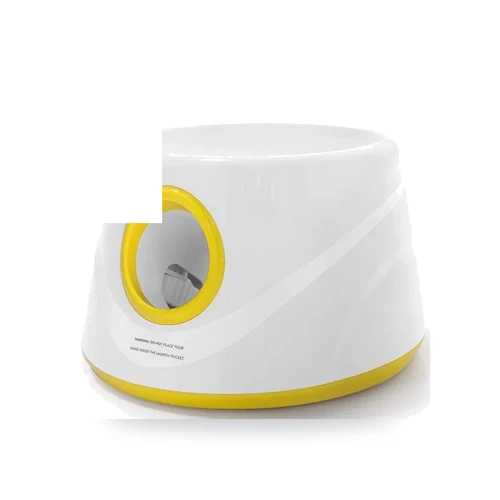
FetchMate Automatic Ball Launcher
Yellow launcher + 3 mini ETPU balls (58 mm) + USB charging cable, in one box.