· Updated 5 August 2026 · Loïc Chiappini
Dog Ball Launcher for Arthritic Dogs: Ask Your Vet First
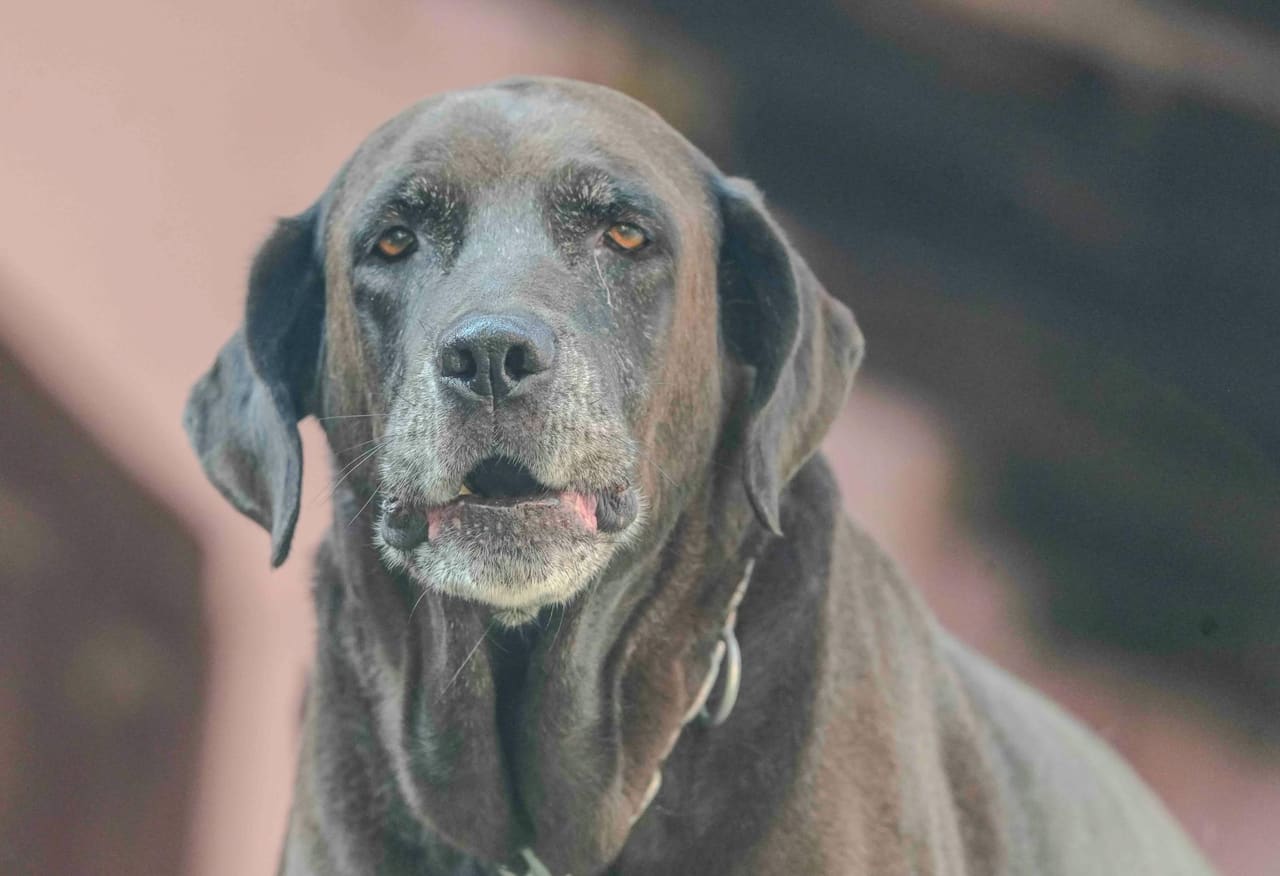
There is a particular sadness to a ten-year-old labrador watching a ball roll across the garden and deciding not to chase it. Owners usually notice it around year seven or eight: stiffness after walks, hesitation at the stairs, slower mornings. Whether fetch should stop entirely is not something a shop can tell you, and we are not going to pretend otherwise. We sell an automatic dog ball launcher; we are not vets. What this page can do is set out the questions worth asking at your next appointment, explain what a machine does and does not change about fetch, and be straight about the dogs it is simply wrong for.
Why "no fetch, ever" is not the automatic answer
The blunt advice exists for good reason. The things that hurt an arthritic joint are all features of enthusiastic fetch: sprint-stop-sprint cycles load and shear the joint surfaces, twisting at speed strains ligaments that are already working harder in a stiff dog, long sessions carry on past the point where supporting muscles have tired, and hard landings on slippery ground turn a manageable joint into an acute injury.
What complicates it is that complete rest has its own cost. Muscle around a painful joint wastes quickly, and less muscle means less support, which usually means more pain — and a senior dog with nothing to do tends to decline faster. That is why most advice for mild arthritis is not "stop" but "change what exercise looks like": controlled, moderate, regular, on good footing. UK charities including the PDSA and the Kennel Club publish free owner guidance on canine arthritis worth reading before your appointment, so you arrive knowing the vocabulary.
Where a launcher can help is that it removes variables: the throw is the same distance at the same angle every time, with no wild arm swing to leap at. Where it can hurt is that a machine never tires. Your shoulder used to end the session; now nothing does, unless you decide it.
The questions to take to the appointment
- How advanced is the arthritis, and in which joints? Hips, elbows, stifles and spine behave differently under fetch.
- Is anything else going on — ligament damage, dysplasia, spinal disease, heart or breathing conditions?
- Is my dog's weight adding to the load? Weight loss usually comes before any increase in activity.
- Is short, controlled fetch appropriate at all — yes or no? Ask for a plain answer.
- If yes: how many minutes, how many days a week? Get numbers you can write down.
- Which surfaces are acceptable, and which are banned?
- What should make me stop and call you?
- Is the current pain management doing its job before we add activity? That is your vet's call, never something to arrange around.
- Would a referral to a qualified canine physiotherapist or hydrotherapist help?
If the answer to question four is no, that is the end of the launcher conversation — the alternatives section below is the useful part of this page for you.
What the vet's description usually means for fetch
| If your vet describes it as… | What that tends to mean |
|---|---|
| Mild — stiff after rest, otherwise moving normally | Short, controlled, low-distance fetch on soft ground is often acceptable, built up slowly |
| Moderate — occasional limp, reluctant on stairs | If allowed at all, shorter and less frequent, with review |
| Marked — visible lameness, avoiding exercise | Fetch is generally off the table; low-impact alternatives instead |
| Severe — pain at rest, difficulty getting up | Pain management and mobility support, not play exercise |
That is a summary of how the conversation usually goes, not a clinical staging system. Your vet's assessment of your dog is the one that counts.
If your vet says yes: what "low impact" actually means
Distance — and an honest limitation of ours
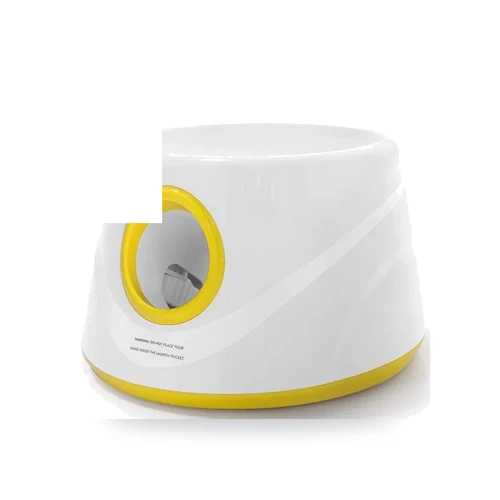
The longer the throw, the faster the run and the harder the stop — and the stop is what hurts. The FetchMate's shortest setting is Distance 1 at 6 metres, and it starts there every time it is switched on. For some dogs that is gentle enough; for others your vet will want shorter, slower movement than any launcher provides — in which case roll the ball along the ground by hand and keep the machine for a different dog. We would rather say that than sell you the wrong tool. Dogs over about 25 kg are outside this machine's design regardless — see the large-dog article.
The ball
Senior dogs often have worn or sensitive teeth, which makes a hard, felted sports ball a worse idea than it is for a youngster. The FetchMate uses its own 58 mm ETPU foam balls — no felt covering to carry grit — and takes nothing else, as the ball size guide explains. Whatever machine you use, bin any split ball.
Surface — the one owners get wrong
Slippery ground undoes everything else. Acceptable: short dry grass, tight carpet, rubber matting. Not acceptable: wet grass, laminate, lino, tiles, and polished patios — hard and slippery, the worst combination. If nothing suitable exists at home, rubber gym mats along the fetch path cost little and solve it; the indoor guide covers flooring in more detail.
Session length — decided in advance, not by the dog
Agree a cap with your vet and set a timer. A stiff dog with drive will not call time on themselves; many mask discomfort until the following morning. Rest days between sessions matter more than the sessions. Keep a short log — date, minutes, surface, how the dog moved the next day — and your next appointment becomes a conversation about evidence rather than impressions.
When a launcher is the wrong tool, full stop
Marked or severe arthritis; moderate to severe hip or elbow dysplasia; post-surgical recovery; diagnosed disc disease (common in dachshunds, French bulldogs and corgis); heart or respiratory disease; flat-faced breeds with breathing difficulty; cognitive decline. In all of these, the answer is your vet's, and the default is no. We would rather lose the sale than have a dog hurt by something we sold — the same honesty policy that runs through our safety guide.
Low-impact alternatives that work for any arthritic dog
- Scent work — treats hidden in boxes, towels or around the garden. Problem-solving at walking pace tires a dog properly without loading a joint. The highest-value swap on this list.
- Hydrotherapy — water supports the weight while muscles work. UK centres typically ask for a vet referral, which is a good sign, not an obstacle.
- Swimming, where access is safe — avoid cold winter water for a stiff dog.
- Snuffle mats and puzzle feeders for bad-weather days.
- Slow lead walks on soft, varied ground, little and often, letting the dog set the pace.
- Canine massage or physiotherapy — via a vet referral rather than booking blind.
Signs to stop and phone the vet
A new or worsening limp during or after play; difficulty getting up the morning after; reluctance to do something the dog was happy doing last week; yelping or flinching when a joint is touched; any loss of mobility that builds over a fortnight. Declining mobility despite a careful routine means the routine is wrong, the pain management needs review, or something else is going on — none of which is fixed by pushing through.
FAQ
Can my arthritic dog use a ball launcher?
Only your vet can answer for your dog. Mild cases are often allowed short, controlled sessions on soft ground; marked or severe cases are steered to scent work and hydrotherapy instead. Ask before you buy.
What launcher distance is safest for a senior dog?
The shortest the machine offers — 6 metres on the FetchMate, which starts on that setting by default. If your vet wants gentler than that, roll the ball by hand instead; no launcher setting is slower than your own arm.
Can fetch make arthritis worse?
Long, fast, daily fetch on hard or slippery ground certainly can. Short, controlled, well-surfaced sessions within limits your vet has set are a different activity — which is the entire point of this page.
My senior dog has hip dysplasia — is a launcher safe?
That depends on severity and belongs to the vet who has seen the X-rays. Do not decide it from a website, including this one.
For a healthy dog in the household, the FetchMate is £69.99 with free UK delivery in 3–8 working days — small and medium dogs only, with sizing covered in the small-dog guide, alternatives in the UK buyer's comparison, and a gentle-start protocol in the rescue introduction.
We are not veterinary professionals. Arthritis, dysplasia and joint pain are clinical conditions — exercise decisions for an affected dog belong to the vet who has examined them.
FetchMate Automatic Ball Launcher
Yellow launcher + 3 mini ETPU balls (58 mm) + USB charging cable, in one box.