· Updated 5 August 2026 · Loïc Chiappini
What Size Balls Fit a Dog Ball Launcher?
Ball size looks like a footnote on a spec sheet. It is actually the first thing to check — ahead of distance, brand or price — because it settles two questions nothing else can fix: does the ball physically work in the machine, and is it safe in your dog's mouth? Get it wrong and you own either an automatic dog ball launcher that jams, or one handing your dog a choking hazard every few seconds.
The first surprise: most launchers do not take tennis balls
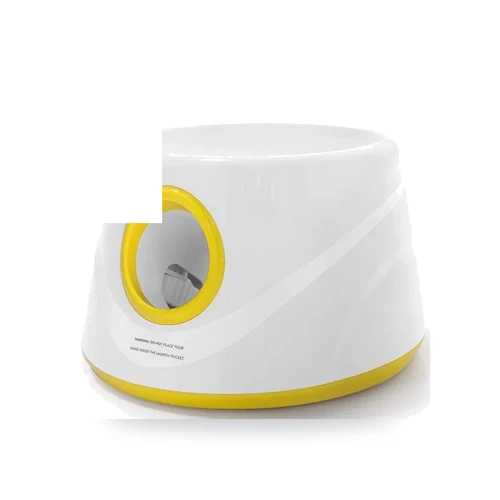
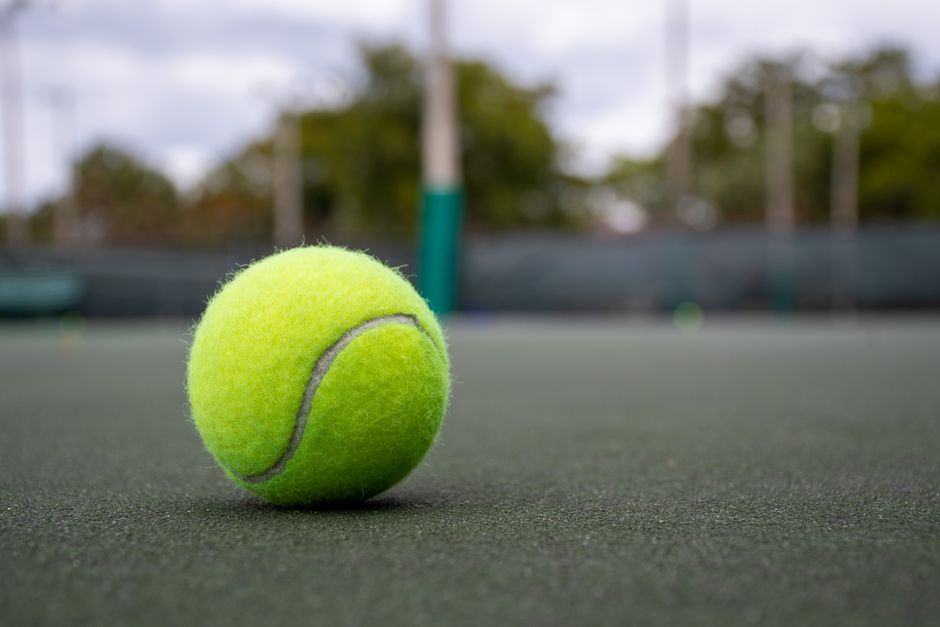
The phrase "tennis ball launcher" is doing a lot of dishonest work in this product category. A standard tennis ball measures roughly 6.5 to 6.8 cm across. The FetchMate's firing channel is built around a 58 mm (2.3 inch) ball — noticeably smaller — so a standard tennis ball simply does not fit, and forcing one in is how you jam a machine. The manufacturer is explicit: use the ETPU balls it is designed for, nothing else. Five of them come in the box.
That is not a design failing. A narrower channel and a lighter ball are what make a compact, small-and-medium-dog machine possible in the first place — the same trade-off explained in our automatic vs manual comparison. But it does mean the "just grab any tennis ball" habit from chucker days does not transfer.
What is an ETPU ball, and why not felt?
ETPU is an expanded foam material — the FetchMate's balls are solid-feeling, lightweight, fuzz-free spheres rather than felted rubber shells. Two practical consequences:
- No felt means no grit. Tennis-ball felt picks up sand and works like fine sandpaper on a dog's enamel over years of daily carrying. A fuzz-free ball avoids that mechanism entirely — one of the five risks covered in the safety guide.
- Chew-resistant is not indestructible. The manufacturer's own wording is that the balls are durable but "not completely unbreakable" — a piece of honesty we are happy to repeat. Inspect weekly, and bin any ball that is split or losing material, because swallowed fragments are a genuine surgical emergency.
Ball sizes by machine
Published sizes, from each maker's own documentation. Where we could not verify a figure ourselves, we say so rather than guessing.
| Machine | Ball size | Source |
|---|---|---|
| FetchMate Automatic Ball Launcher | 58 mm (2.3 in) ETPU only — 5 included | Manufacturer's manual |
| iFetch Original | 1.5 in mini balls | goifetch.com, checked August 2026 |
| iFetch Too | 2.5 in balls | goifetch.com, checked August 2026 |
| PetSafe Automatic | Larger-format balls — we could not verify the exact spec, so check the current listing | — |
| Manual chuckers | Standard tennis balls (6.5–6.8 cm) | Sized to the cup |
The lesson from that table: balls are not interchangeable between machines, and not even reliably within one brand — iFetch's two models take completely different sizes. Buy the balls your machine's maker specifies, and measure across the widest point before buying any multipack, because pet-shop "dog tennis balls" are not always the size they look.
Ball size is also jaw size
A dog carries a ball wedged between the canine teeth and the roof of the mouth. Too wide and there is nothing to grip — the dog paws at it, gives up, and the owner concludes their dog "isn't a fetch dog" when the real problem is a centimetre of ball. Too small is the dangerous direction: a ball that fits entirely inside the mouth can slip behind the tongue and block the airway, and wet, slippery balls are hard to hook back out. The blunt rule: the ball should be too big to disappear into the mouth.
That is why machine choice follows dog size. The FetchMate's 58 mm ball suits the small and medium dogs the machine is built for — the band covered in our small-dog guide. For a large dog, roughly 25 kg and up, a 58 mm ball is on the small side for safety and the whole machine is the wrong tool; the large-dog article covers what to use instead. Near a boundary, size up rather than down: the serious risk sits entirely on the small side. In a multi-dog household with mixed sizes, run separate sessions and only ever leave out balls sized for the largest dog.
When to replace a ball
Retire a ball when any of these is true:
- It is split, punctured or bitten through
- It is losing chunks or shedding material
- It has been chewed out of round — a deformed ball feeds badly and jams machines
- It has spent a fortnight in a wet garden
A launcher that starts misfiring is usually being fed worn, out-of-shape balls rather than developing a fault — try a fresh ball before assuming the machine is broken. And keep launcher balls for launcher sessions: a ball that lives in the dog's toy box all week gets chewed soft, stops flying properly, and makes the game less special. That storage habit also helps with the obsession risk in high-drive dogs, and it is step one of the routine in our training guide.
Getting refills
Because the FetchMate uses a specific 58 mm ETPU format, treat refills as a named-size purchase: 58 mm ETPU dog balls, not "small tennis balls". If in doubt about a listing, measure one of your originals and compare, or email us and we will point you the right way. Whatever you do, skip supermarket tennis-ball multipacks — they are standard size and will not go through the machine.
FAQ
Can I use normal tennis balls in a dog ball launcher?
Not in the FetchMate — a standard tennis ball is 6.5 to 6.8 cm and the machine takes 58 mm ETPU balls only. Some larger machines are built for bigger balls; check the maker's published spec for the exact size before buying anything.
What balls come with the FetchMate?
Three ETPU balls, 58 mm across, in the box with the launcher, a USB charging cable and the manual — £69.99 with free UK delivery in 3–8 working days.
Are tennis balls bad for dogs' teeth?
The felt is mildly abrasive once it has picked up grit, and long-term ball-carriers show visible wear. Fuzz-free balls avoid that mechanism; whichever type you use, keep balls for sessions rather than leaving one in the mouth all day.
What size ball does a labrador need?
A large-format ball — an adult labrador's mouth is wide enough that a small ball can slip behind the tongue. That also rules out the FetchMate for labradors; see the large-dog guide, or the full field in the UK buyer's comparison.
FetchMate ball dimensions are from the manufacturer's manual; other makers' sizes are as published on their own sites on the date shown. For anything involving your dog's teeth or airway, your vet is the right source.
FetchMate Automatic Ball Launcher
Yellow launcher + 3 mini ETPU balls (58 mm) + USB charging cable, in one box.