· Loïc Chiappini
Secure Dog Exercise Fields in the UK: A Practical Guide
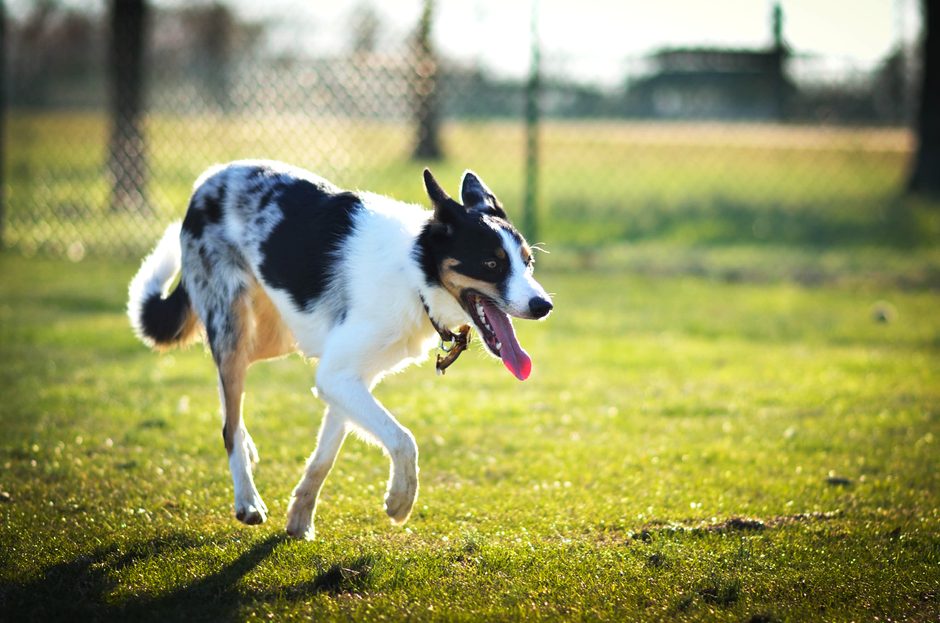
Ask a British dog owner where they walk and, increasingly, the answer is not "the park". It is a field they book by the hour on their phone. The model barely existed a decade ago and is now a genuine industry — and if you have a dog who cannot be trusted off-lead, or one who would rather not meet another dog ever again, it changes what a walk can be.
What a secure dog field actually is
British Dog Fields defines it plainly: a space hired on an exclusive basis to exercise or train your dog, fenced to at least 6 feet (1.8 m) all the way round, gates included. Fields can be grass, meadow or woodland. Bookings run from twenty minutes to several hours.
The word that matters is exclusive. This is not an American-style dog park where everyone piles in together. You book the slot, you get the field, and nobody else comes in. That single difference is the reason the model took off in the UK.
secure dog fields across the UK and Ireland, with more opening regularly
— British Dog Fields, 2026
What it costs
Expect £3 to £30 per hour, with around £10 being the common middle. Many fields sell half-hour slots at roughly half that, and most offer discounts for block bookings or regular users. The price is normally for the field, not per dog — worth checking, because a household with two dogs then pays the same as one.
One practical note before you book: these fields are privately owned and, as British Dog Fields points out, there is no government regulation of their standards. Fencing quality, parking, water, waste bins and whether the gate has a double-gated airlock all vary. Read the reviews, and if your dog is a climber or a digger, ask about the fence line specifically.
Who they are really for
| Situation | Why a private field helps |
|---|---|
| Reactive or fearful dogs | No surprise encounters. The dog can decompress instead of scanning for threats. |
| Unreliable recall | A safe place to practise off-lead without the risk of a road or a lost dog. |
| Chasers (deer, livestock, bikes) | Nothing to chase, and a fence if instinct wins anyway. |
| Recovery from injury | Controlled, quiet space with no other dogs barrelling into a healing joint. |
| Bitches in season | Exercise without unwanted attention. |
| Owners worried about theft | Enclosed, private, nobody else on site. |
Notice what is missing from that list: "dogs who need to burn energy". Plenty of people book fields for exactly that, and it works — but if raw energy is your only problem, an hour a week in a field is an expensive way to solve it. The dogs who genuinely need the exclusivity are the ones on the list above.
Getting more out of a booked hour
A field is a blank space. Turn up with no plan and you get a dog sniffing hedgerows for fifty minutes, which is lovely but is not why you paid. The owners who get value out of it arrive with a structure.
Ten minutes of sniffing first. Let the dog read the field before you ask anything. Skipping this is why the first recall attempt so often fails — the dog has not finished processing where it is.
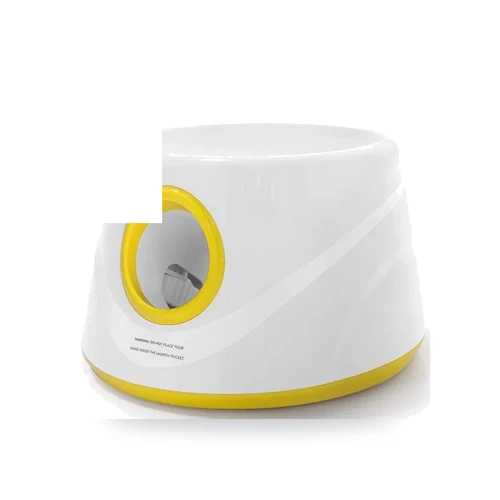
Then movement. This is where a fetch machine earns its place. The whole point of a secure field is that a ball can go anywhere without ending up on a road or in someone else's picnic. Our automatic dog ball launcher throws 6, 10 or 14 metres, which covers most field sizes on the shortest two settings, and it repeats the same throw indefinitely while you stand still and watch your dog rather than working your shoulder. If your dog does not yet retrieve to a machine, our training guide gets you there in four short sessions — practise at home first, not in a paid slot.
Recall between throws. The best recall training happens when the dog is mid-arousal, not sitting calmly. Call the dog off a ball, reward heavily, release back to the game. That is a far harder recall than the one you practise in the kitchen, and it is the one you actually need.
Finish with settle. Five minutes of lead walking or scent work before you get in the car. Ending on maximum arousal is how dogs learn that fields mean frantic.
What to bring
- Water and a bowl. Not every field has a tap.
- Poo bags — more than you think, and take them home if there is no bin.
- A long line for the first visit, until you trust the fence and the dog.
- High-value treats for the recall work.
- Your fetch kit, charged. If you bring a battery-powered launcher, charge it the night before — ours will not run while plugged in, so a flat battery means a dead hour. Balls in the pocket as backup.
- A towel. British fields in February are mud with grass on top.
Fields versus the garden
They are not competitors, they are different tools. A booked field is for the things a garden cannot give: distance, novelty, safe off-lead freedom. A garden is for the daily grind — the fifteen minutes before work, the quick burst when it is raining sideways, the third session of a day the dog has spent alone.
Most UK gardens are small: the ONS puts the median at 188 m² in Great Britain, and one household in eight has no garden at all. That is precisely why the shortest launcher setting matters more than the longest — and why we wrote a whole guide on using a launcher indoors for the days when even the garden is out. If your dog is small or medium, our small dog launcher guide covers ball sizing, which matters more than throw distance.
median garden size in Great Britain — and 1 household in 8 has no garden at all
— Office for National Statistics, 2020
A word of caution about fetch in a big space
A secure field removes the physical risks of fetch — traffic, other dogs, lost balls — but it does not remove the behavioural ones. A dog who already fixates on a ball will fixate harder in a field where nothing interrupts the loop. Watch for the dog who will not stop, will not drink, and cannot settle afterwards. Our safety guide covers this properly, along with joint stress and the mouth injuries that come from crowding a launch opening.
And if your dog is a big one, read the large dog guide before buying any compact machine, including ours. A 58 mm ball is the wrong size for a labrador, whatever the field allows.
Finding one near you
There is no single official register. The practical route is a directory search for your county, then reviews, then a phone call about the fence if your dog is an escape artist. Prices, slot lengths and rules on multiple dogs vary field by field, so read the specific booking terms rather than assuming a national standard exists — because it does not.
FetchMate Automatic Ball Launcher
Yellow launcher + 3 mini ETPU balls (58 mm) + USB charging cable, in one box.